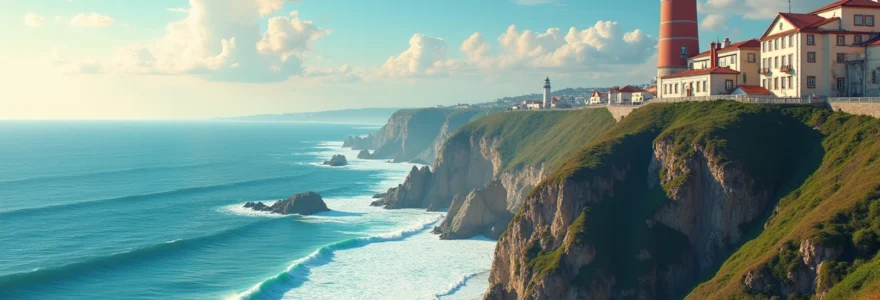
Portugal’s coastline, stretching over 1,794 kilometers, offers a captivating blend of dramatic cliffs, golden beaches, and charming fishing villages. This diverse shoreline has shaped the country’s maritime history, influenced its culture, and continues to attract surfers, nature enthusiasts, and travelers from around the globe. From the sun-soaked beaches of the Algarve to the rugged cliffs of the Silver Coast, Portugal’s seaside landscape presents a rich tapestry of experiences waiting to be explored.
Coastal topography of portugal: from algarve cliffs to douro estuaries
Portugal’s coastline is characterized by its diverse geological features, each region offering a unique landscape that has been shaped by millennia of natural forces. In the south, the Algarve coast is renowned for its striking limestone cliffs, carved into fantastic shapes by wind and water. These golden-hued formations create a stunning contrast against the azure waters of the Atlantic, with hidden grottoes and secluded beaches nestled between towering rock faces.
Moving northward, the coastline transforms into the sweeping sandy beaches of the Alentejo, where vast stretches of untouched shoreline are backed by rolling dunes and aromatic pine forests. This region offers a more wild and untamed coastal experience, with fewer crowds and a sense of pristine natural beauty.
The central coast of Portugal, often referred to as the Silver Coast, presents a mix of long, sandy beaches interspersed with rocky outcrops and small bays. This area is known for its powerful waves, making it a paradise for surfers and water sports enthusiasts. The coast here is punctuated by charming seaside towns and fishing villages, each with its own unique character and maritime heritage.
As you reach the northern regions, the landscape becomes more dramatic, with rugged cliffs and fjord-like inlets dominating the scenery. The mouth of the Douro River near Porto creates a unique estuarine environment, where the freshwater meets the sea, fostering a rich ecosystem and providing the perfect conditions for the region’s famous port wine production.
Surfing hotspots: analyzing wave patterns in peniche and nazaré
Portugal has earned a reputation as one of Europe’s premier surfing destinations, with its Atlantic-facing coastline receiving consistent swells throughout the year. Two locations, in particular, have gained international recognition for their exceptional wave conditions: Peniche and Nazaré.
Supertubos: mechanics of hollow wave formation
Peniche is home to the world-famous Supertubos beach, known for its perfectly hollow waves. The formation of these tubular waves is a result of a unique combination of factors. The beach’s orientation, coupled with an offshore canyon, creates ideal conditions for wave energy to focus and form perfectly cylindrical barrels. As the swell approaches the shore, it encounters a sudden change in depth, causing the wave to pitch forward and create the hollow shape that surfers crave.
The mechanics behind Supertubos’ wave formation involve:
- A steep, sandy bottom that causes the wave to break with intensity
- Offshore winds that hold the wave face up, allowing it to barrel
- A specific swell direction that aligns with the beach’s contours
- Tidal influences that affect wave quality throughout the day
Nazaré canyon: bathymetric factors behind giant waves
Nazaré has gained global fame for producing some of the largest waves on the planet, with heights reaching up to 30 meters (100 feet). The secret behind these monstrous waves lies in the Nazaré Canyon, an underwater trench that extends far out into the Atlantic Ocean. This deep canyon acts as a funnel, channeling and amplifying incoming swells.
The bathymetric features that contribute to Nazaré’s giant waves include:
- A canyon depth of up to 5,000 meters, creating a significant underwater slope
- A narrowing of the canyon as it approaches the shore, concentrating wave energy
- Interaction between canyon-focused waves and those traveling along the coastline
- Refraction and diffraction of wave energy due to the complex underwater topography
Seasonal swell patterns along the silver coast
The Silver Coast, stretching from Lisbon to Porto, experiences distinct seasonal swell patterns that attract surfers year-round. During the winter months (October to March), the coast receives powerful North Atlantic swells, generating larger, more consistent waves. These swells are often the result of low-pressure systems forming off the coast of Greenland and Iceland.
In contrast, the summer months (April to September) bring smaller, more manageable waves, ideal for beginners and intermediate surfers. This period is characterized by shorter-period swells generated by local wind patterns and milder North Atlantic conditions. The transition seasons of spring and autumn often offer the best combination of swell size, favorable winds, and comfortable temperatures for surfing.
Impact of atlantic fetch on portuguese surf conditions
The fetch , or the distance over which wind blows to generate waves, plays a crucial role in determining surf conditions along the Portuguese coast. The vast expanse of the Atlantic Ocean provides an extensive fetch, allowing swells to travel great distances and develop into powerful, organized wave trains before reaching the Portuguese shoreline.
Long-period swells, typically associated with distant storm systems, benefit from this extended fetch. These swells arrive with more energy and create cleaner, more defined wave faces. In contrast, short-period swells generated by local winds have a limited fetch and often result in choppier, less organized wave conditions.
Understanding the relationship between fetch and wave quality is essential for predicting surf conditions along the Portuguese coast. Surf forecasters analyze factors such as wind direction, duration, and fetch length to anticipate the arrival of prime surfing conditions.
Traditional fishing villages: preserving maritime heritage
Portugal’s coastline is dotted with picturesque fishing villages that have maintained their traditional way of life for centuries. These communities serve as living museums, preserving age-old fishing techniques, boat-building crafts, and maritime traditions that have shaped the country’s coastal culture.
Culatra island: sustainable practices in ria formosa
Culatra Island, located in the Ria Formosa Natural Park, exemplifies sustainable fishing practices that have been passed down through generations. The island’s community of around 1,000 inhabitants relies primarily on artisanal fishing and shellfish harvesting, employing methods that minimize environmental impact and ensure the long-term viability of marine resources.
Key sustainable practices observed on Culatra Island include:
- Use of traditional wooden boats powered by small engines or sails
- Employment of selective fishing gear to reduce bycatch
- Rotation of shellfish harvesting areas to prevent overexploitation
- Community-led initiatives for marine conservation and education
Berlengas archipelago: marine biodiversity conservation
The Berlengas Archipelago, situated off the coast of Peniche, represents a unique ecosystem where traditional fishing practices coexist with marine conservation efforts. Designated as a UNESCO Biosphere Reserve, the archipelago is home to diverse marine life and serves as an important nesting site for seabirds.
Conservation initiatives in the Berlengas Archipelago focus on:
- Implementing fishing quotas to maintain sustainable fish populations
- Establishing no-take zones to protect critical marine habitats
- Conducting scientific research to monitor ecosystem health
- Promoting eco-tourism to raise awareness about marine conservation
Mira beach: evolution of xávega fishing technique
Mira Beach, located on the Silver Coast, is renowned for its preservation of the Xávega fishing technique, a traditional method that has been practiced for centuries. This unique fishing style involves teams of fishermen working together to drag large nets from the sea using tractors or, in the past, oxen.
The evolution of Xávega fishing at Mira Beach showcases:
- Adaptation of traditional methods to modern technologies
- Preservation of community-based fishing practices
- Integration of sustainable fishing principles to ensure long-term viability
- Cultural significance as a tourist attraction and educational tool
Coastal ecosystems: from tidal marshes to sand dunes
Portugal’s diverse coastal ecosystems play a vital role in supporting marine biodiversity, protecting shorelines, and regulating local climates. These dynamic environments range from expansive tidal marshes teeming with birdlife to towering sand dunes that shift and change with the wind and waves.
Tidal marshes, such as those found in the Tagus Estuary near Lisbon, serve as critical habitats for migratory birds and act as natural filters, improving water quality and protecting inland areas from storm surges. These marshes are characterized by salt-tolerant vegetation that has adapted to the daily ebb and flow of tides, creating a unique ecosystem that supports a diverse array of flora and fauna.
Sand dune systems, prevalent along the central and northern Portuguese coast, form natural barriers against coastal erosion and provide habitats for specialized plant and animal species. These dunes are in constant motion, shaped by wind and waves, and require careful management to maintain their ecological integrity while accommodating human activities such as tourism and recreation.
Coastal lagoons, like the Ria de Aveiro in the north, represent another important ecosystem type found along the Portuguese coast. These shallow, brackish water bodies support rich biodiversity and serve as nurseries for many fish species. The intricate network of channels and islands within these lagoons creates a mosaic of habitats that are crucial for both wildlife and traditional human activities such as salt production and aquaculture.
Architectural landmarks: lighthouses and fortresses of the portuguese coast
The Portuguese coastline is adorned with architectural marvels that stand as testament to the country’s rich maritime history and strategic importance. Lighthouses and fortresses dot the shoreline, each with its own unique story and architectural significance.
Cabo da roca lighthouse: westernmost point of continental europe
Perched atop rugged cliffs at the westernmost point of continental Europe, the Cabo da Roca Lighthouse has been guiding ships since 1772. This iconic structure, standing 165 meters above sea level, offers panoramic views of the Atlantic Ocean and serves as a popular tourist destination.
Key features of the Cabo da Roca Lighthouse include:
- A distinctive square tower painted white with red trim
- An original Fresnel lens system still in operation
- Historical significance as a navigational aid for centuries
- Surrounding natural beauty, including endemic flora species
Belém tower: manueline architecture and maritime symbolism
The Belém Tower, located at the mouth of the Tagus River in Lisbon, is a masterpiece of Manueline architecture and a symbol of Portugal’s Age of Discovery. Built in the early 16th century, this UNESCO World Heritage site served both as a fortress and a ceremonial gateway to Lisbon.
Architectural elements of the Belém Tower showcase:
- Intricate stone carvings depicting maritime themes and royal symbols
- A blend of Gothic and Renaissance styles unique to the Manueline period
- Strategic design features for defense, including cannon ports and a drawbridge
- A prominent position in the river, symbolizing Portugal’s naval power
Fort of são joão baptista: strategic defense of berlengas islands
The Fort of São João Baptista, situated on the main island of the Berlengas archipelago, represents a remarkable feat of 17th-century military engineering. Built to protect the coast from pirate attacks, this fortress now serves as a unique accommodation for visitors to the nature reserve.
Notable aspects of the Fort of São João Baptista include:
- Integration with the island’s natural rock formations
- Adaptive reuse as an eco-friendly hostel
- Preservation of original architectural elements and fortifications
- Spectacular views of the surrounding marine protected area
Aveiro lighthouse: navigational importance in the ria de aveiro
The Aveiro Lighthouse, standing tall at the entrance to the Aveiro Lagoon, has been an essential navigational aid for ships entering this complex waterway since 1893. Its distinctive red and white striped tower is a familiar landmark for both mariners and tourists alike.
The Aveiro Lighthouse is notable for:
- Its crucial role in guiding vessels through the challenging lagoon entrance
- A unique cylindrical design with a spiral staircase
- Adaptation to modern technology while maintaining historical significance
- Its position as a symbol of Aveiro’s maritime heritage
Coastal viticulture: influence of sea breezes on portuguese wine regions
Portugal’s coastal wine regions benefit from the unique microclimates created by their proximity to the Atlantic Ocean. Sea breezes play a crucial role in moderating temperatures, influencing humidity levels, and shaping the character of wines produced in these areas.
The Vinho Verde region in the northwest, known for its crisp, light white wines, is particularly influenced by the Atlantic climate. Cool sea breezes help maintain acidity in the grapes and contribute to the wine’s characteristic freshness. This maritime influence also extends to the Bairrada and Lisboa wine regions, where it helps to balance ripening and preserve aromatic compounds in the grapes.
In the Setúbal Peninsula, home to the famous Moscatel de Setúbal, the interaction between the Atlantic and the Sado Estuary creates a unique microclimate that is ideal for late-ripening varieties. The cooling effect of sea breezes allows for a longer growing season, resulting in wines with complex flavor profiles and balanced acidity.
Coastal viticulture in Portugal also faces challenges, such as increased humidity that can lead to fungal diseases in the vineyards. Winemakers have adapted their practices to these conditions, employing techniques such as careful canopy management and strategic vineyard orientation to maximize the benefits of sea breezes while minimizing potential risks.
The influence of coastal conditions on Portuguese wines extends beyond climate to include terroir elements such as salt-infused soils and marine sediments. These factors contribute to the unique mineral characteristics found in many coastal Portuguese wines, creating a true taste of the seaside in every glass.