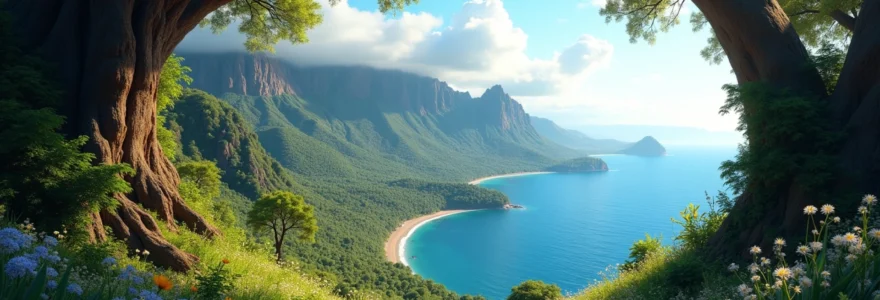
Nestled in the Atlantic Ocean, Madeira stands as a testament to nature’s artistry and geological marvels. This Portuguese archipelago, often referred to as the “Pearl of the Atlantic,” captivates visitors with its lush landscapes, dramatic coastlines, and unique microclimates. From its volcanic origins to its UNESCO-protected forests, Madeira offers a diverse tapestry of natural wonders that have earned it the moniker “Island of Eternal Spring.”
Geological formation and volcanic origins of madeira
Madeira’s story begins deep beneath the ocean’s surface, where volcanic activity shaped its rugged terrain millions of years ago. The island emerged from the sea as a result of intense volcanic eruptions, creating a landscape of steep cliffs, deep valleys, and towering peaks. This volcanic heritage is evident in the island’s basaltic rock formations and the rich, fertile soil that supports its diverse flora.
The island’s geological history is a testament to the power of Earth’s tectonic forces. Over time, erosion and weathering have sculpted Madeira’s landscape, creating its characteristic steep-sided valleys and jagged coastlines. These dramatic formations not only provide breathtaking vistas but also play a crucial role in shaping the island’s unique microclimates and ecosystems.
Geologists and nature enthusiasts alike are drawn to Madeira’s volcanic features, which offer insights into the island’s formation and evolution. From the towering peak of Pico Ruivo, Madeira’s highest point at 1,862 meters, to the ancient lava tubes that honeycomb the island’s interior, the volcanic legacy is ever-present.
Madeira’s unique laurisilva forest ecosystem
One of Madeira’s most remarkable natural treasures is its Laurisilva forest, a living remnant of the ancient forests that once covered much of Southern Europe and North Africa. This prehistoric ecosystem, characterized by its evergreen laurel trees, is a window into Earth’s distant past, offering a glimpse of what the world might have looked like millions of years ago.
UNESCO world heritage status and conservation efforts
Recognizing the global significance of Madeira’s Laurisilva, UNESCO designated it as a World Heritage Site in 1999. This recognition has bolstered conservation efforts, ensuring the protection of this unique ecosystem for future generations. The Laurisilva forest covers approximately 20% of Madeira’s land area, primarily in the mountainous interior of the island.
Conservation initiatives focus on preserving the delicate balance of the Laurisilva ecosystem, combating invasive species, and promoting sustainable tourism practices. These efforts are crucial in maintaining the forest’s biodiversity and ecological integrity.
Endemic flora: madeira mahogany and Lily-of-the-Valley tree
The Laurisilva forest is home to an array of endemic plant species, many of which are found nowhere else on Earth. Two notable examples are the Madeira Mahogany ( Persea indica ) and the Lily-of-the-Valley Tree ( Clethra arborea ). These species have evolved in isolation over millions of years, adapting to Madeira’s unique environmental conditions.
The Madeira Mahogany, with its dense, reddish-brown wood, has been prized for centuries for its durability and beauty. The Lily-of-the-Valley Tree, known locally as folhado , is celebrated for its fragrant white flowers that bloom in summer, filling the forest with their sweet scent.
Levada walks through primeval forests
One of the best ways to experience Madeira’s Laurisilva forest is through its network of levadas – irrigation channels that crisscross the island. These ingenious waterways, some dating back to the 16th century, not only distribute water from the rainy north to the drier south but also provide hikers with access to some of the most pristine and remote areas of the forest.
Levada walks offer visitors the opportunity to immerse themselves in the Laurisilva’s lush environment, walking alongside centuries-old trees draped in moss and lichens. The air is thick with humidity, and the forest floor is carpeted with ferns and other shade-loving plants, creating an atmosphere that transports hikers to a prehistoric world.
Biodiversity hotspot: madeira’s rare bird species
The Laurisilva forest is not only a haven for plant life but also a crucial habitat for several rare and endemic bird species. The Madeira Firecrest ( Regulus madeirensis ), the Trocaz Pigeon ( Columba trocaz ), and the Madeira Chaffinch ( Fringilla coelebs madeirensis ) are among the avian treasures that call this forest home.
Birdwatchers from around the world are drawn to Madeira for the chance to spot these elusive species. The dense canopy and varied understory of the Laurisilva provide ideal conditions for these birds, offering both shelter and abundant food sources.
Microclimates and the “eternal spring” phenomenon
Madeira’s reputation as the “Island of Eternal Spring” is well-deserved, thanks to its unique climatic conditions. The island’s varied topography and oceanic location create a mosaic of microclimates, resulting in year-round mild temperatures and diverse weather patterns across relatively short distances.
Influence of the gulf stream on madeira’s climate
The Gulf Stream plays a pivotal role in shaping Madeira’s climate. This warm ocean current moderates temperatures throughout the year, preventing extreme fluctuations and contributing to the island’s subtropical climate. The influence of the Gulf Stream ensures that Madeira enjoys mild winters and comfortable summers, making it an attractive destination in all seasons.
The Gulf Stream’s impact extends beyond temperature regulation. It also influences rainfall patterns and humidity levels, contributing to the lush vegetation that blankets much of the island. This interplay between ocean currents and local topography is a key factor in Madeira’s ecological diversity.
Altitude-based temperature variations across the island
Madeira’s mountainous terrain creates significant variations in temperature and precipitation based on altitude. As you ascend from sea level to the island’s highest peaks, you can experience multiple climate zones within a short distance. This altitude-based climate variation is one of the defining characteristics of Madeira’s “eternal spring” phenomenon.
At sea level, temperatures are typically warm and stable throughout the year. However, as you climb higher into the mountains, temperatures decrease, and rainfall increases. This gradient creates distinct ecological zones, each with its own characteristic flora and fauna adapted to specific climatic conditions.
Funchal’s mild Year-Round weather patterns
Funchal, Madeira’s capital city, exemplifies the island’s pleasant climate. Nestled in a natural amphitheater facing the Atlantic Ocean, Funchal benefits from a sheltered position that contributes to its consistently mild weather. Average temperatures in Funchal range from about 16°C (61°F) in winter to 23°C (73°F) in summer, with minimal fluctuation throughout the year.
This stable climate has made Funchal a popular destination for those seeking to escape harsh winters or scorching summers elsewhere. The city’s gardens and parks flourish year-round, showcasing a vibrant palette of exotic flowers and lush greenery that epitomizes Madeira’s “eternal spring.”
Madeira’s dramatic coastal landscapes
While Madeira’s interior is characterized by lush forests and mountains, its coastline offers equally spectacular scenery. The island’s volcanic origins have created a dramatic shoreline of towering cliffs, hidden coves, and unique geological formations that attract visitors from around the world.
Cabo girão: europe’s highest sea cliff
Standing at an impressive 580 meters (1,902 feet) above sea level, Cabo Girão is one of Madeira’s most iconic landmarks. This colossal sea cliff, located west of Funchal, offers breathtaking views of the Atlantic Ocean and the island’s southern coastline. In recent years, a glass-floored skywalk has been installed at the top of the cliff, providing thrill-seekers with a heart-pounding perspective of the sheer drop below.
Cabo Girão is not only a testament to Madeira’s volcanic past but also a prime example of the island’s ongoing geological processes. The cliff face bears witness to millions of years of erosion and weathering, revealing layers of volcanic rock that tell the story of Madeira’s formation.
Ponta de são lourenço peninsula’s volcanic formations
At the eastern tip of Madeira lies the Ponta de São Lourenço Peninsula, a stark contrast to the green landscapes found elsewhere on the island. This rugged promontory showcases Madeira’s volcanic heritage in its most raw and exposed form. The peninsula’s arid climate and sparse vegetation allow visitors to clearly observe the layers of volcanic rock and ash that make up the island’s foundation.
Hiking trails wind through this lunar-like landscape, offering panoramic views of the Atlantic and the chance to spot unique flora adapted to the harsh conditions. The peninsula is also home to several endemic plant species that have evolved to thrive in this challenging environment.
Porto moniz natural swimming pools
On Madeira’s rugged northern coast, the town of Porto Moniz is famous for its natural swimming pools. These pools, formed by volcanic rock, are filled with crystal-clear seawater, providing a unique bathing experience. The contrast between the dark volcanic rock and the turquoise water creates a striking visual spectacle that embodies the raw beauty of Madeira’s coastline.
The Porto Moniz pools are a prime example of how Madeira’s volcanic landscape has been adapted for tourism and leisure. While nature created these pools, they have been carefully enhanced with modern amenities to ensure safety and comfort for visitors, all while preserving their natural character.
Viticulture and madeira wine production
Madeira’s unique climate and topography not only contribute to its natural beauty but also play a crucial role in its viticultural heritage. The island is renowned for its eponymous fortified wine, which has been produced here for centuries and has played a significant role in global trade and cultural exchange.
The steep, terraced hillsides of Madeira provide ideal conditions for grape cultivation. The island’s volcanic soil, rich in minerals, imparts distinctive flavors to the grapes. The combination of warm temperatures, high humidity, and sea breezes creates a unique terroir that contributes to the wine’s characteristic taste and aroma.
Madeira wine is known for its longevity and ability to withstand extreme conditions, a quality that made it popular during long sea voyages in the Age of Exploration. The wine’s production process, which includes heating and oxidation, results in a fortified wine that can age for decades or even centuries without spoiling.
Visitors to Madeira can explore the island’s wine heritage through tours of vineyards and wine cellars, particularly in the southern part of the island. These experiences offer insights into the traditional methods of Madeira wine production and the opportunity to taste various styles, from dry to sweet.
Madeira’s unique Flora-Inspired architecture and gardens
The island’s rich botanical heritage has not only shaped its natural landscapes but has also influenced its architecture and garden design. Madeira’s gardens are world-renowned, showcasing both native species and exotic plants from around the globe that thrive in the island’s favorable climate.
Monte palace tropical garden’s exotic collections
Perched high above Funchal, the Monte Palace Tropical Garden is a horticultural masterpiece that spans 70,000 square meters. This garden is a testament to Madeira’s ability to support a vast array of plant life from different corners of the world. Visitors can wander through themed gardens that include plants from far-flung regions such as Japan, South Africa, and Australia.
The garden’s design incorporates elements of both Eastern and Western landscaping traditions, creating a unique fusion that reflects Madeira’s position as a historical crossroads of global trade. Exotic trees, colorful flowerbeds, and tranquil water features are complemented by an impressive collection of tiles and sculptures that add cultural depth to the botanical experience.
Botanical garden of madeira’s research facilities
The Botanical Garden of Madeira, located in Funchal, serves as both a public garden and an important center for botanical research. Established in the 1960s, this garden plays a crucial role in the conservation of Madeira’s endemic plant species and the study of the island’s unique flora.
The garden’s research facilities include a herbarium and laboratories dedicated to the study and preservation of Madeira’s plant biodiversity. Visitors can explore themed areas that showcase different aspects of the island’s flora, from indigenous species to exotic tropical plants. The garden also offers panoramic views of Funchal, combining botanical education with stunning vistas of the city and sea.
Quinta do palheiro ferreiro’s English-Style landscaping
The Quinta do Palheiro Ferreiro, also known as Blandy’s Garden, is a prime example of how English landscaping traditions have been adapted to Madeira’s unique environment. This expansive estate, dating back to the early 19th century, features meticulously manicured lawns, formal gardens, and woodland areas that showcase both native and exotic plant species.
The garden is particularly renowned for its collection of camellias, which bloom spectacularly in the winter months. The Quinta’s design demonstrates how Madeira’s climate allows for the successful integration of temperate and tropical plant species, creating a diverse and visually stunning horticultural display.
These gardens not only serve as attractions for visitors but also play an important role in conservation efforts and public education about Madeira’s unique botanical heritage. They stand as living museums, preserving rare species and traditional gardening techniques while adapting to contemporary environmental challenges.