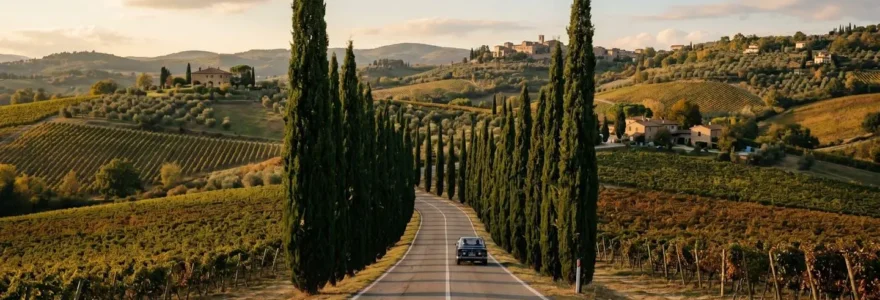
Tuscany rewards those who resist the temptation to see everything. A week provides enough time to experience the region’s layered character—medieval architecture, viticultural landscapes, and the particular stillness of late afternoon in a hilltop piazza—without the exhaustion that comes from treating Italian back roads like a motorway sprint. The strategic question isn’t which villages to visit, but how to structure your days so that driving becomes discovery rather than deadline.
The day-tour approach from Florence or Siena—rushing to tick off San Gimignano’s towers, Pienza’s piazza, and Montalcino’s fortress in a single day—delivers photographic evidence of presence but little else. The week-long immersion model inverts this logic: instead of maximizing villages visited, you maximize the depth of territorial understanding, unlocking the rhythm of place that remains invisible when you’re racing to the next parking lot.
Tuscany divides into distinct geographic zones—Chianti Classico’s vineyard-quilted hills, the dramatic clay formations of the Crete Senesi, Val d’Orcia’s World Heritage landscapes—each demanding different strategies. The two-base approach detailed below allows you to settle into the character of two complementary regions rather than skimming the surface of five.
Your strategic framework in 30 seconds
- Quality over quantity: limit yourself to 2-3 villages maximum per day to avoid rushed experiences
- Strategic basing works best: split your week between two regional bases (Chianti area + Val d’Orcia) for optimal balance
- Book vineyard visits ahead during April-October; walk-ins become increasingly unreliable in peak season
- Budget €15-40 per tasting and establish designated driver rotation from day one
The art of slowing down: why Tuscany demands a week
The dominant mistake first-time Tuscany visitors make is geographic optimism—imagining they can cover four or five villages before sunset, squeezing in two winery stops, and still arrive at dinner relaxed enough to appreciate the meal. Tuscany’s appeal lies precisely in what cannot be rushed: the 20-minute conversation with an enoteca owner about soil differences, the unplanned detour down a strada bianca that dead-ends at a Romanesque abbey, the hour spent watching light change across the Val d’Orcia from a village wall.
The region’s geography complicates quick touring. Chianti Classico, the Crete Senesi, Val d’Orcia, and the Maremma coast represent distinct landscapes and cultural zones, each demanding different pacing. According to IRPET’s tourism analysis, rural areas like Amiata saw visitor increases of 33.1% compared to pre-pandemic levels, evidence that travelers increasingly seek depth over the art-city checklist. A week allows you to choose two or three zones and experience them beyond surface level.
Beyond the romantic vision of cypress-lined drives, practical preparation matters—from understanding ZTL restricted zones to completing essential pre-trip checks for a road trip before leaving home. The logistics aren’t complex, but they require attention: car rental documentation, GPS with offline Italy maps, cash for parking machines, and realistic expectations about medieval street widths versus modern vehicle dimensions.
Plotting your route: regional bases vs. nomadic loops
The structural decision that shapes your week is whether to establish one or two accommodation bases and make daily loops, or adopt a nomadic approach with multiple hotel changes. Each strategy creates a different experience, and the trade-offs matter more than most guidebooks acknowledge.
| Approach | Single Florence/Siena base | Split-week (2 bases) | Nomadic (3+ bases) |
|---|---|---|---|
| Total driving | High (repeated routes) | Medium (strategic repositioning) | Low daily but constant packing |
| Logistics burden | Minimal (unpack once) | Moderate (one transition) | High (constant packing) |
| Regional immersion | Shallow (day-tripper status) | Deep (temporary local in two zones) | Variable |
| Spontaneity allowance | High | Moderate | Low (pre-booked sequence) |
| Typical cost | City hotel premium | Balanced (rural rates) | Higher (single-night premium) |
Consider the Mercier family’s approach: three nights at an agriturismo near Radda in Chianti (May 4-7) allowed them to establish a daily rhythm—morning vineyard visits to Castello di Volpaia and Vignamaggio (pre-booked for 10:00 slots), village lunches in Greve’s piazza, late-afternoon drives through the Chiantigiana when light turned golden. Their mid-week relocation to Pienza (May 7-10) shifted the tempo: Val d’Orcia photography at dawn, thermal baths at Bagno Vignoni, and slower village exploration—Montepulciano’s steep streets, Montalcino’s fortress viewpoint. The two-base rhythm prevented both route repetition and the fatigue of constant packing.
The split-week approach—establishing one base in the Chianti area (Greve, Radda, or Castellina) for three nights, then relocating to a Val d’Orcia base (near Montalcino or Pienza) for the remaining nights—tends to offer the most rewarding balance. You gain the settled feeling of a temporary neighborhood, build rapport with your agriturismo hosts, and discover the morning baker’s schedule and the evening passeggiata rhythm. The single mid-week car journey (roughly 90 minutes between zones) feels purposeful rather than disruptive.
If wine takes priority over village architecture, consider intensifying your Chianti Classico time and treating southern Tuscany more selectively. Conversely, photography enthusiasts focused on Val d’Orcia’s cypress landscapes might reverse that equation. Travelers seeking to adapt these frameworks can create your own Tuscany itinerary here, adjusting the balance between wine routes and village exploration based on personal priorities.
Villages where time moves differently
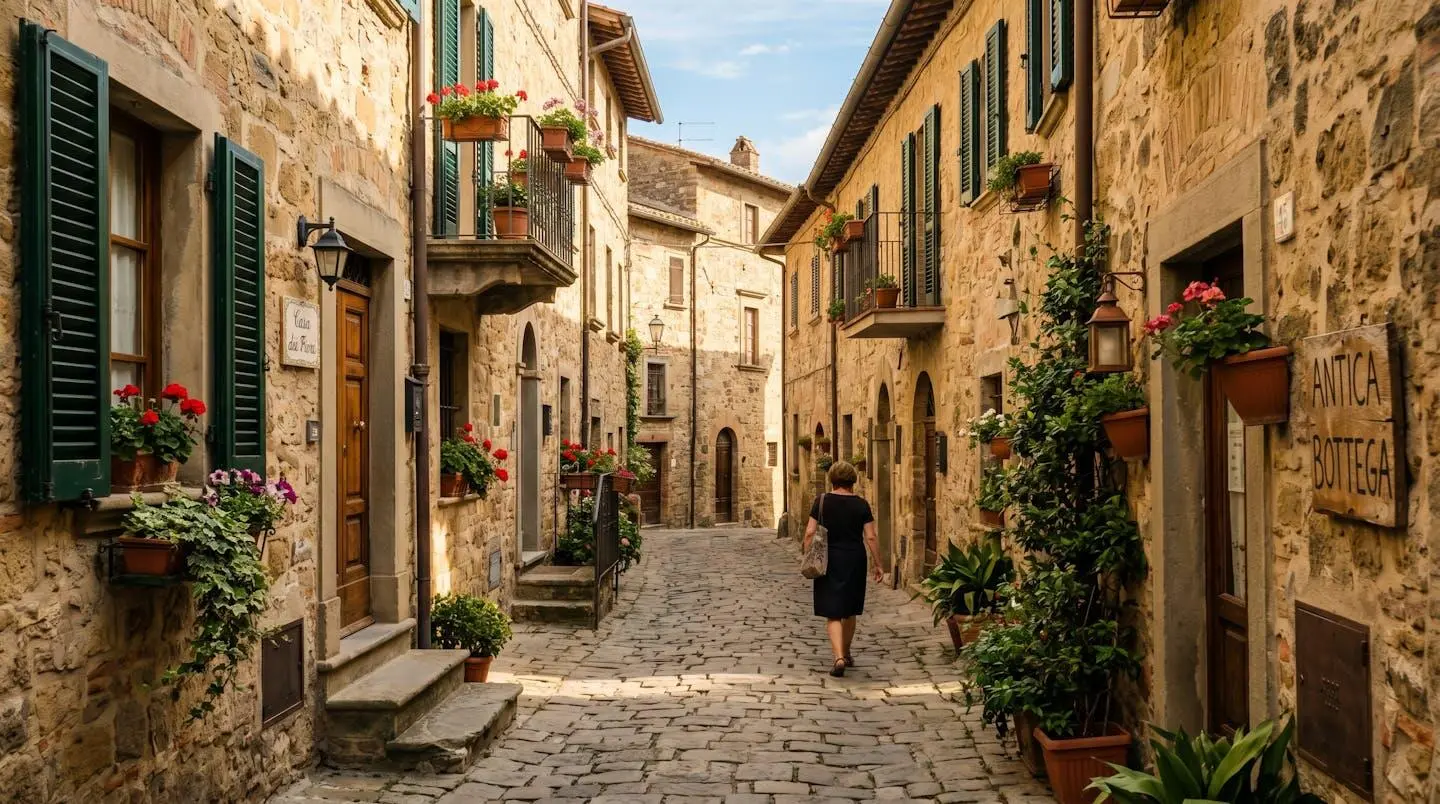
Selecting which villages deserve your limited time requires understanding their distinct characters rather than treating all medieval hilltop settlements as interchangeable. The curatorial choice matters more than coverage.
Architectural drama: San Gimignano’s 14 remaining tower houses create an unmistakable skyline, but the crowds that come with UNESCO status mean arriving before 09:00 or after 17:00 transforms the experience. Pienza represents Renaissance urban planning idealism frozen in honey-colored travertine—compact, walkable in 90 minutes, and genuinely worth the stop despite tour bus presence. Volterra occupies a commanding plateau with Etruscan foundations visible beneath Roman and medieval layers.
Wine village culture: Greve in Chianti functions as the unofficial capital of Chianti Classico territory, its triangular piazza surrounded by wine shops where degustazione transitions seamlessly from tasting to purchasing. Montalcino perches above the Brunello vineyards, its fortress providing orientation to the surrounding vigneti that produce Italy’s most age-worthy Sangiovese. Montepulciano’s steep main street climbs from medieval gate to Renaissance summit, with wine cellars tunneled into the tufa beneath virtually every palazzo.
Under-visited alternatives: Certaldo Alto, the upper town reached by funicular, offers medieval authenticity without the crush—brick paving, quiet streets, and Boccaccio’s birthplace museum. Nearby Montefioralle, a circular walled hamlet above Greve, provides the experience of a living village (population around 70) where you’re a guest rather than a tourist, its stone archways and unrestored medieval character offering photographic rewards without the parking chaos.
Practical note: parking in historic centers is either impossible or expensive. Most villages provide parcheggi outside the walls—expect to walk 5-10 minutes uphill. Wednesday and Saturday often bring weekly markets that compound both the appeal and the parking challenge.
Vineyard roads: where to sip between the hills
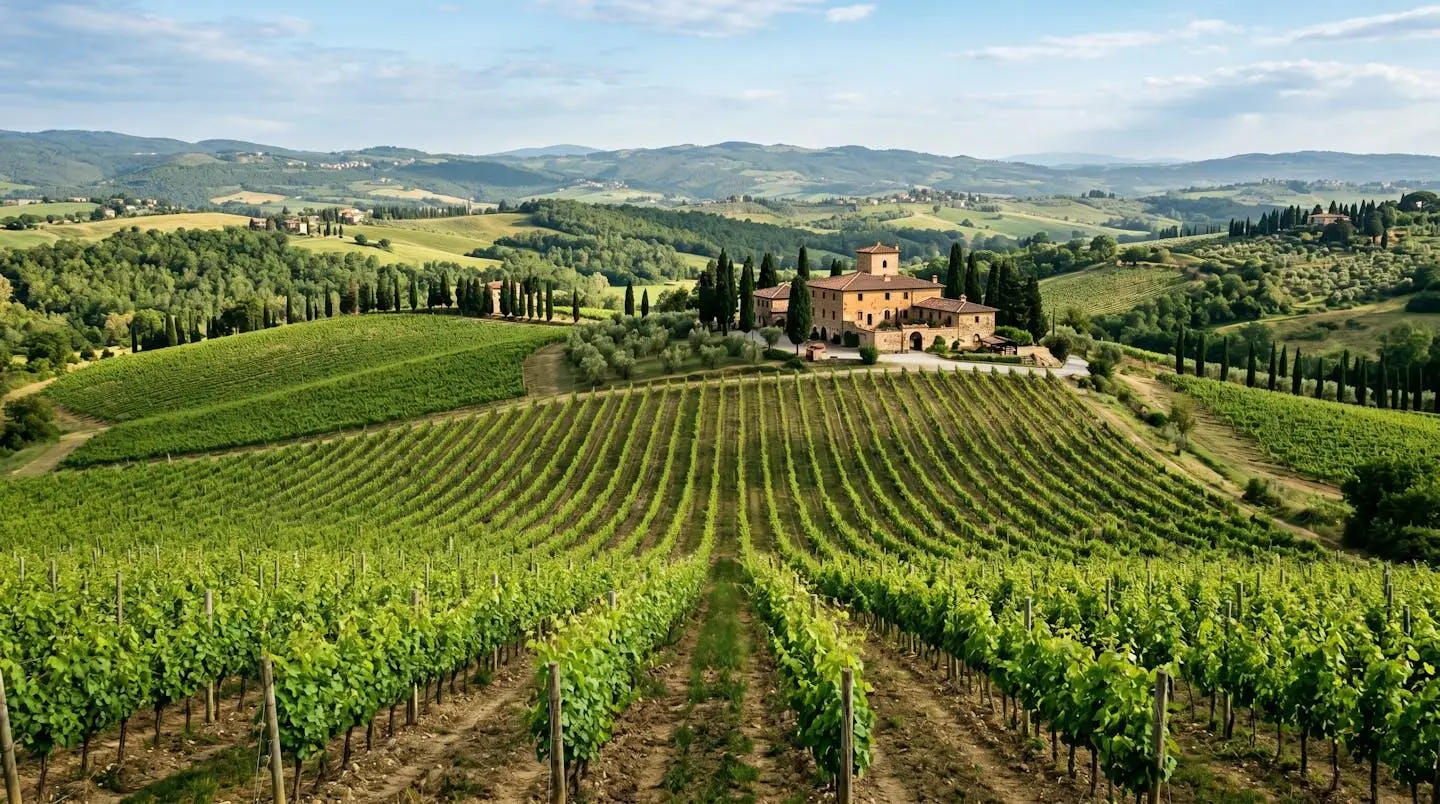
Tuscany’s wine tourism infrastructure has professionalized considerably over the past decade, which brings both benefits (English-speaking guides, professional tasting rooms, advance online booking) and trade-offs (less spontaneity, structured timing, commercial polish). The Consorzio Vino Chianti Classico represents 480 producers, of which 342 market wines under their own label, all distinguished by the Black Rooster trademark that signals quality compliance.
The Strada del Vino Chianti Classico (SR222, the Chiantigiana) connects Florence to Siena through prime vigneto territory—estates here range from historic names like Castello di Ama and Fontodi to smaller family operations where the winemaker personally conducts tastings. Brunello di Montalcino country surrounds the hilltop town, with prestigious estates requiring advance booking and commanding premium tasting fees. Vino Nobile di Montepulciano provides a middle path—serious DOCG wines but less international fame translating to easier access and lower costs.
Vineyard visit essentials: Most estates require reservation 48 hours ahead during April through October; walk-ins become unreliable in peak season. Standard tastings cost 15-25 € per person for entry-level experiences, rising to €40-60 at prestigious estates. Plan 90 minutes to 2 hours per visit—rushing defeats the purpose. Tasting doesn’t obligate purchase, though buying supports small producers. Establish driver rotation or book guided tours from your base town.
Seasonal timing matters: vendemmia typically runs mid-September through October, creating atmospheric vineyard activity but reducing some estates’ tasting availability as production takes priority. For travelers prioritizing wine experiences above village exploration, these tips for a vineyard getaway offer additional strategies for maximizing Tuscany’s viticultural riches.
Tuscany road trip questions answered
Do I need an international driving permit?
According to the U.S. Embassy in Italy, Americans visiting as tourists and intending to drive should obtain an International Driving Permit before leaving the U.S. Alternatively, you may use your valid American license if accompanied by an official Italian translation. Requirements vary by nationality—UK, EU, and Australian licenses have different rules—so verify with your car rental company at booking.
How do I avoid ZTL camera fines?
ZTL (Zona a Traffico Limitato) zones restrict vehicle access to historic centers, enforced by automatic cameras. Look for electronic signs reading “ZTL” with red circles—if active, entry results in fines mailed weeks later. Park outside historic centers in designated parcheggi and walk in. If your accommodation sits within a ZTL, request the hotel to register your license plate with authorities in advance.
What’s a realistic daily budget?
Expect €120-180 per person daily for comfortable mid-range travel: agriturismo accommodation, meals, wine tasting, and fuel. Budget travelers using simple rooms and picnic lunches can manage on €80-100 per person, though this constrains vineyard visit frequency.
Is October too late to visit?
October represents one of Tuscany’s finest months—harvest season brings vineyard activity, autumn light enhances the landscape, and temperatures remain mild (typically 15-22°C). Some wineries reduce tasting availability during vendemmia as production dominates, but this is offset by fewer crowds and lower accommodation rates than summer.
Can I manage with English only?
English functions adequately in tourism-facing businesses—hotels, established wineries, restaurants in popular villages. Communication becomes more challenging in small-town shops and rural agriturismi. Learn basic Italian courtesies (buongiorno, grazie, per favore) and download Google Translate’s offline Italian pack.
Should I book accommodation in advance?
Book your first night definitely, and ideally secure both base accommodations before departure during peak season (May-June, September-October). Quality agriturismi in prime wine country fill weeks ahead. Single-night bookings often incur premiums or minimum-stay requirements, another argument for the two-base strategy over nomadic hotel-hopping.